
What do we know about caregivers?

An estimated 8.4 million Americans are unpaid caregivers for adults with mental health issues; roughly the same as the population of New York City
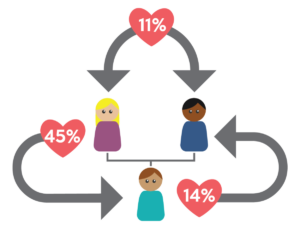 88% of caregivers for adults with mental illness are family members
- 45% are parents
- 14% are adult children
- 11% are spouses
 People with mental illnesses receive care for nine years on average, as opposed to 4 years for people with other illnesses.
 Three quarters of caregivers reported that they were impacted or highly impacted in their involvement in activities (work, school, family, friends, religion, etc.) by their caregiving role
 Religion was the least impacted area
 Friendships and recreation were the most impacted areas
What have we learned about caregivers from Screening?
Half of all screens taken by caregivers at mhascreening.org were for depression.
Of caregivers who took a screen at mhascreening.org
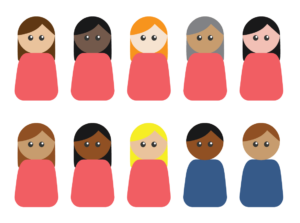
over 80% were women
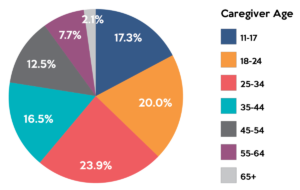
Nearly 2/3 (61.21%) were under age 34
Why is community inclusion important?
Community inclusion means that all people, regardless of their health care needs, have the right to: be respected as members of their communities, participate in recreational activities in neighborhood settings, work at jobs in the community that pay a competitive wage and use their skills and abilities to the fullest, and pursue educational opportunities with their peers.
Inclusion in the community allows a person to serve a role and feel that they have a sense of purpose and belong to something bigger than themselves. Part of what can make caregiving difficult is a lack of community inclusion for people with mental illnesses.
Two-thirds of caregivers report that the person they care for has received some support to increase their participation in community life.
 Contact your local MHA affiliate to get information about support in your area
45% of people with mental illness receiving care live in the home of the caregiver, yet only 1/3 of caregivers reported that their loved one was involved or very involved with their choice of housing.

Find housing resources for people with mental health conditions.
Only 20% of caregivers reported that their loved ones were involved in competitive employment.

Learn more about meaningful work, its role in the recovery process, and supported employment
For more information, read the full report: Community Inclusion from the Perspective of Caregivers
More on caregiving


Resources on caring for yourself
Sources
Caregivers of Adults With Mental Illness (2016). National Alliance for Caregiving. http://www.caregiving.org/mentalhealth/
U.S. Census Bureau. http://www.census.gov/quickfacts/table/PST045215/3651000
On Pins & Needles: Caregivers of Adults with Mental Illness (Rep.). (2016, February). National Alliance for Caregiving, in partnership with Mental Health America, National Alliance on Mental Illness. http://www.caregiving.org/wp-content/uploads/2016/02/NAC_Mental_Illness_Study_2016_FINAL_WEB.pdf
Plotnick, D. and Kennedy, J. (2016). Community Inclusion from the Perspective of Caregivers of People with Psychiatric Disabilities. Mental Health America, Alexandria, VA. https://mhanational.org/wp-content/uploads/2025/04/Community-Inclusion-from-the-Perspective-of-Caregivers-FINAL.pdf
Institute for Community Inclusion at UMass Boston. http://www.communityinclusion.org/article.php?article_id=213
Proprietary data from mhascreening.org.